CentralSea Almond2020
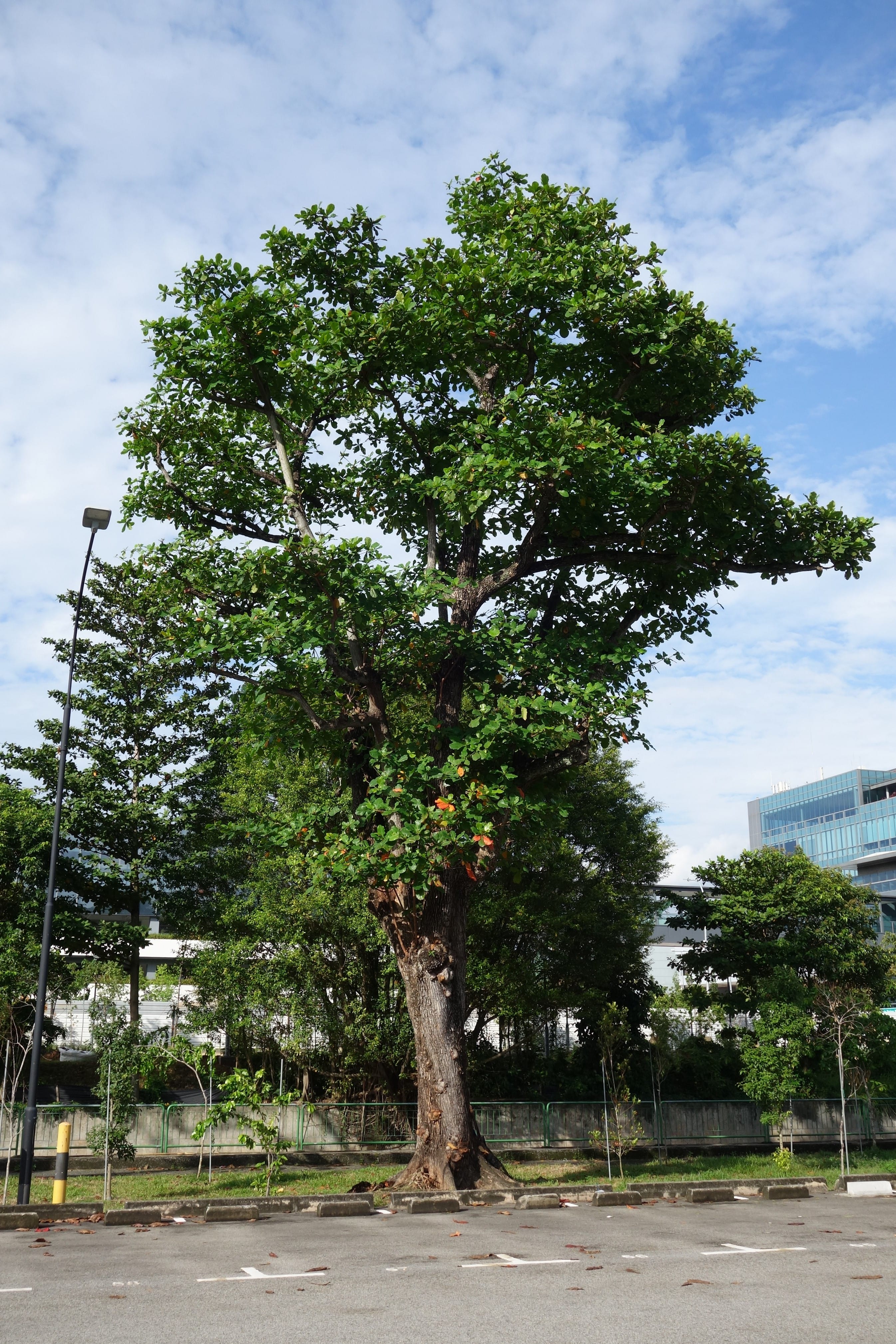
Sea Almond (HT 2020-316)
This Heritage Tree can be found beside Pasir Panjang Park Carpark (near MRT Station).
Heritage Tree Information
Reference ID | Scientific name: Terminalia catappa | Location |
The Sea Almond is a native coastal tree, locally classified as ‘Least Concern’ and can be naturally found throughout tropical Asia, northern Australia and Polynesia. The species can also be found inland along roads and in old Malayan villages, planted for shade from the tropical sun.
The tree can grow up to 35 m tall and displays a characteristic pagoda-like shape from horizontal branches at regular intervals along the grey, fissured, often buttressed trunk.
The large, paddle-shaped leaves of this deciduous tree turn vivid red or yellow before falling, creating an autumnal atmosphere. Afterwards, new leaves emerge, and the tree subsequently produces clusters of small, greenish-white, fragrant flowers. The dried leaves contain tannins with antibacterial and antifungal properties, making it popular among aquarium enthusiasts for conditioning water.
The tree produces fruits with a stony core that ripens from green to yellow or red. They have a corky rind, which contains tiny air cavities that enable them to float, allowing dispersal by currents and waves to new shores for germination. The fruits are also eaten by fruit bats and monkeys, which aid in seed dispersal. The edible seed kernel has a flavour similar to almonds, giving rise to its common name.
The reddish timber can be used for houses and boat building while various parts of the tree are used in folk medicine from relieving rheumatic joints to dysentery.
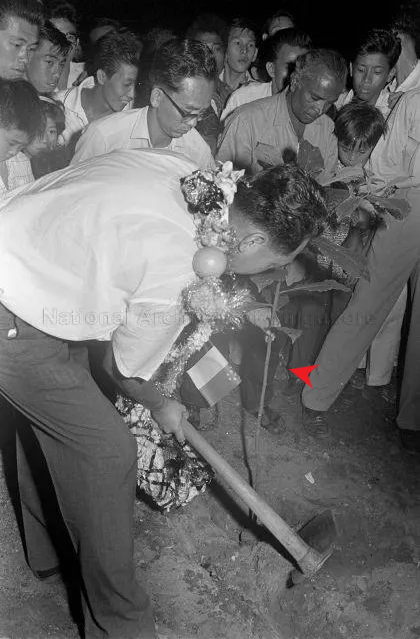
In 1963, it was recorded that then Prime Minister Lee Kuan Yew planted a Sea Almond at Pasir Panjang Park. Though the tree planted cannot be definitively located, it is believed that this Heritage Sea Almond was also planted during the same time. Hence, it was estimated to be greater than 57 years of age and had a girth of 3.1 m when it was endorsed as a Heritage Tree in 2020.
For more information on this species, please refer to NParks' Flora & Fauna Web profile. (opens in new tab)