
NorthMango2020
Mango (HT 2020-312)
This Heritage Tree can be found at the stateland, near junction of Kranji Close & Kranji Road .
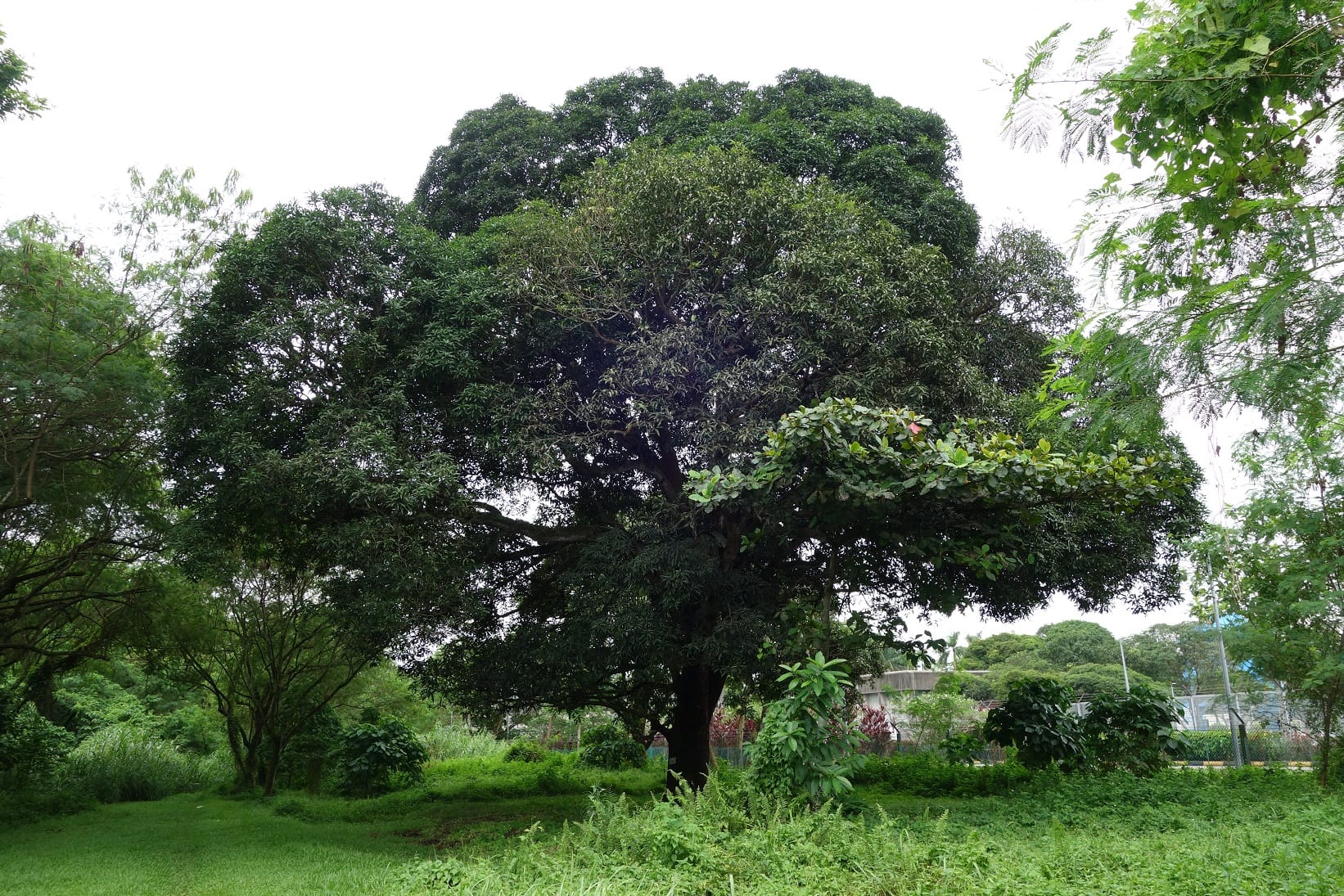
📷: Brendon Phuah
Heritage Tree Information
Reference ID | Scientific name: Mangifera indica | Location |
The Mango is popularly grown for its edible fruit and has been in cultivation for hundreds of years. It is believed to have originated from the monsoon belt of India although details remain uncertain. The tree can grow up to 30 m tall, and has a trunk of rough, shallowly fissured bark. It has a dense rounded crown of dark green leathery leaves and when the leaves are crushed, they release a smell of turpentine.
The trees usually have two flowering seasons each year. The flowers are fragrant, held in dense bunches and are greenish yellow to pale cream or even reddish in colour. There are usually two flowering seasons each year. The fruit contains a single large and hard seed that is round to oblong in shape, up to 20 cm long and 10 cm wide. The fruit ripens from green to yellow or orange, and the sweet, succulent yellow flesh is enjoyed by people as well as animals.
A myriad of varieties of mangoes are available in our markets as specially bred hybrids and cultivars of Mango trees of different desired qualities are cultivated in countries such as Indonesia, Pakistan, Australia and even Taiwan as an economic crop.
In the past, the Mango is often planted in villages in Singapore for the popular fruit that it bears. It is also planted in HDB estates as a popular fruit tree.
This Heritage Tree had a girth of 2.9 m and was likely to have existed here for more than 50 years when it was endorsed in 2020.
For more information on this species, please refer to NParks Flora & Fauna Web profile. (opens in new tab)