
CentralStem-fruited Fig2019
Stem-fruited Fig (HT 2019-302)
This Heritage Tree can be found on the open space, in front of No. 3 Winchester Road.
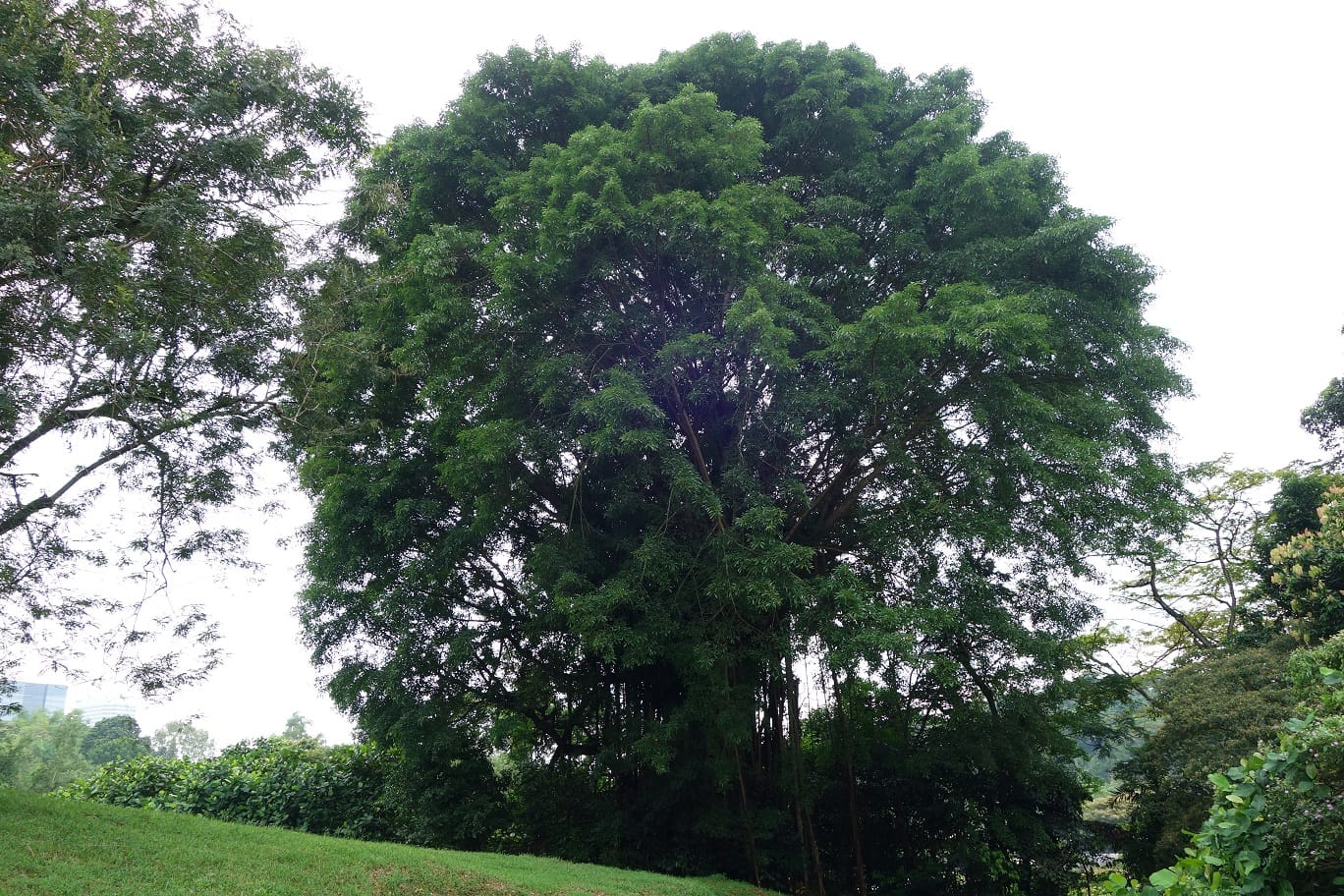
📷: Heritage Tree Secretariat
Heritage Tree Information
Reference ID | Scientific name: Ficus caulocarpa | Location |
The Stem-fruited Fig is a large, deciduous tree that can grow up to 35 m tall. It develops a cast crown of spreading branches. It occurs naturally in Sri Lanka, India, Myanmar, Thailand, Ryukyu Islands, Taiwan, Peninsular Malaysia, Singapore, Sumatra, Java, the Lesser Sunda Islands, Borneo, the Philippines, the Celebes, the Moluccas, New Guinea and the Solomon Islands.
This deciduous tree undergoes a distinct pattern when changing its leaves – the old leaves are shed rapidly, remains bare for a few days, and develops the new leaves simultaneously over most of the crown within a fortnight. During this process, the crown is flushed with reddish-pink and the ground below the tree is littered with pale-green bud-scales (technically stipules) and fallen leaves. A similar habit seems to occur in related species, such as Ficus superba (opens in new tab) and Ficus virens (opens in new tab).
The specific epithet caulocarpa is derived from ancient Greek, kaulos meaning "stem" and karpos meaning "fruit"; hence, the common name "stem-fruited fig".
As with many other Ficus species, the figs are a reliable source of food for fruit-eating animals such as the Pink-necked Green Pigeon (Treron vernans) (opens in new tab), Coppersmith Barbet (Megalaima haemacephala) (opens in new tab) and Yellow-vented Bulbul (Pycnonotus goiavier) (opens in new tab). The figs are whitish with dull pink spots and ripen to a dull greyish purple.
This Heritage Tree was 24 m in girth when endorsed in 2019.
For more information on this species, please refer to NParks' Flora & Fauna Web profile. (opens in new tab)