Off-Shore IslandsNeem Tree2019
Neem Tree (HT 2019-300)
This Heritage Tree can be found in Saint John's Island, near village House and jetty entrance.
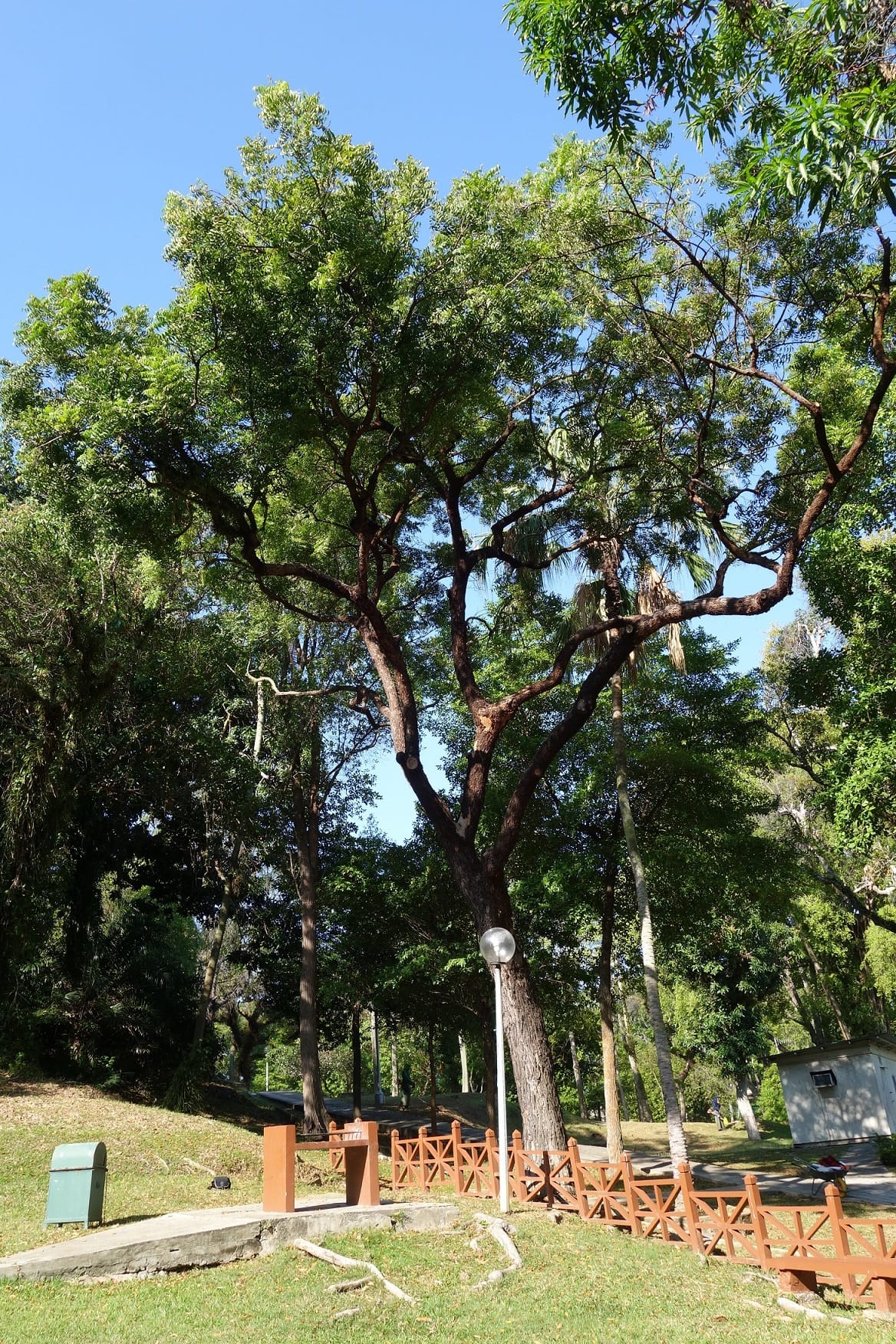
📷: Brendon Phuah
Heritage Tree Information
Reference ID | Scientific name: Azadirachta indica | Location |
The exact origin of the Neem Tree is unknown. It is probably found in Myanmar but widely cultivated and naturalized in tropical Asia and Africa. The evergreen Neem Tree grows fast in the tropics and can reach up to 15 to 30 m tall. It tolerates drought and thrives in well-drained soils. Each leaf is 15 to 40 cm long, pinnately compound, and carries eight to 19 asymmetrically curved leaflets, each with a toothed margin. The tree produces small white flowers, which have a very sweet, jasmine-like scent. The flesh of its fruit, a drupe is edible and has a bittersweet taste.
The genus name, Azadirachta, comes from the words azad, meaning ‘free’ in Persian, and dirakh, which means ‘tree’. The name indica refers to its probably Indian origin. Hence, the name literally means the ‘free tree of India’. This is fitting as it has many uses, including medicinal, agricultural and environmental.
In Indian communities, Neem trees have a strong cultural and religious presence, being commonly planted along streets, around homes, schools and temples, and in gardens and parks. People call the Neem Tree ‘a traditional Indian village pharmacy’, as its many medicinal qualities have been in use for thousands of years. It is also commonly used in soaps, toothpaste and hair products, and as a natural pesticide.
This Neem Tree has likely stood here on St John’s Island for more than 50 years. It measured 2.2 m in girth when endorsed as a Heritage Tree in 2019.
For more information on this species, please refer to NParks Flora & Fauna Web profile. (opens in new tab)