
CentralKepayang2014
Kepayang (HT 2014-232)
This Heritage Tree can be found in Singapore Botanic Gardens, opposite Sun Garden.
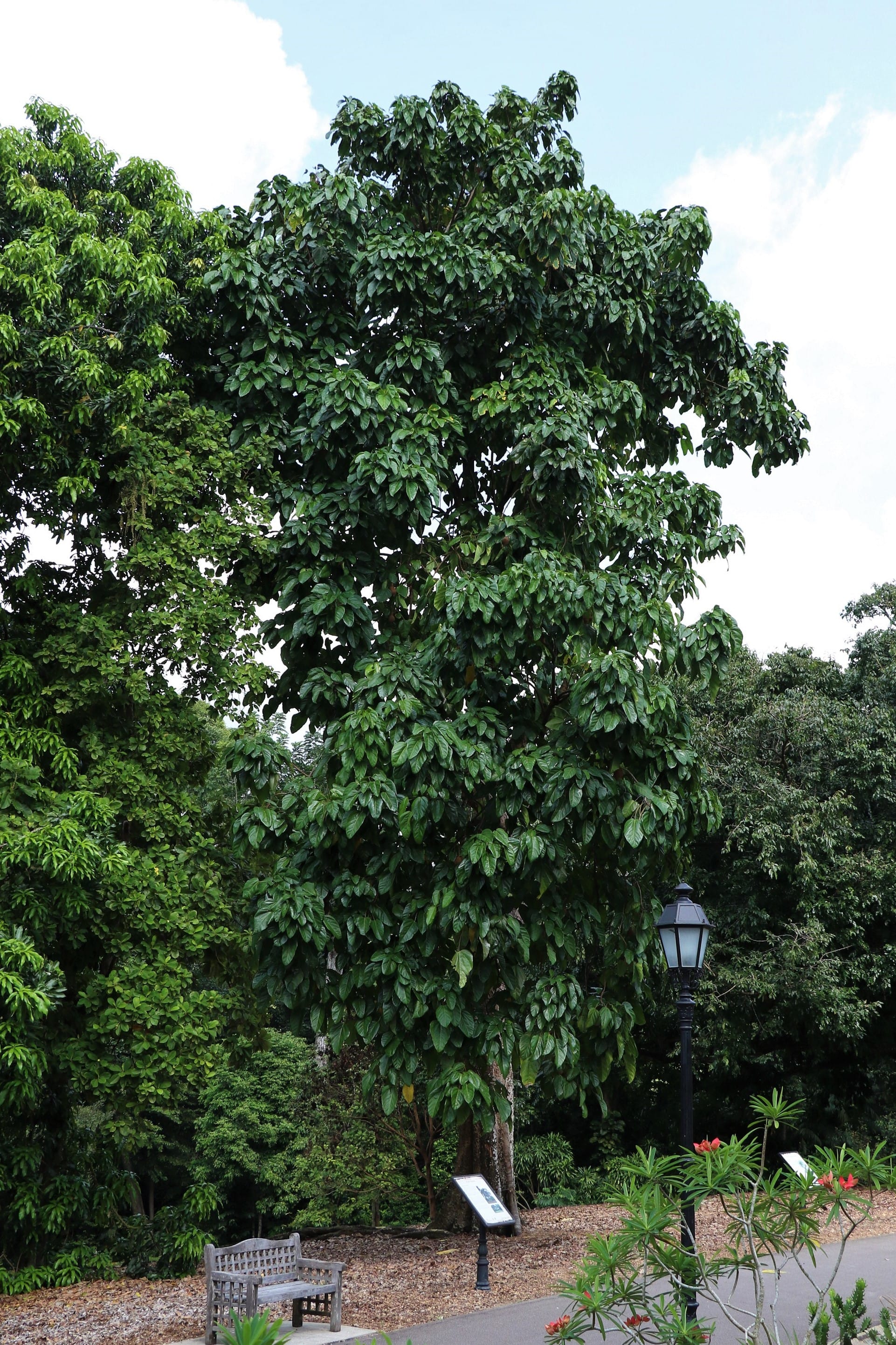
📷: Hazri Boey
Heritage Tree Information
Reference ID | Scientific name: Pangium edule | Location |
The Kepayang is a remarkable yet formidable tree native to this region. Its fruits are oddly shaped, resembling a bloated stomach packed with large seeds, and the tree is notorious for containing hydrogen cyanide: a toxic compound present in every part of the plant.
This toxin, however, is water-soluble and can be removed through washing. Indigenous communities have long discovered this and developed various methods to treat the leaves and seeds for safe consumption. The oil extracted from the seeds has been used by jungle folk as an coconut oil alternative during cooking. In the early days, the fresh leaves, seeds, and oil were also valued for their antiseptic and disinfectant properties.
The tree's species name, edule, is Latin for "edible" — a fitting descriptor given how widely it is cultivated for food. Its seeds are easily transported, and the saplings are hardy enough to establish themselves in forested environments. The seeds are also buoyant, allowing rivers to carry them far and wide before they wash ashore.
The Kepayang is a slow but enduring tree, beginning to bear fruit only after 15 years, yet capable of living to a remarkable age.
When treated, the kernels can be ground into a thick, dark gravy known as rawon, which forms the base of beloved East Javanese dishes such as nasi rawon and meats served in sambal rawon. In Singapore and Malaysia, the seeds are perhaps best known as the defining ingredient in ayam (chicken) buah keluak, a signature dish of Peranakan cuisine.
For more information on this species, please refer to NParks' Flora & Fauna Web profile. (opens in new tab)