CentralCannon Ball Tree2014
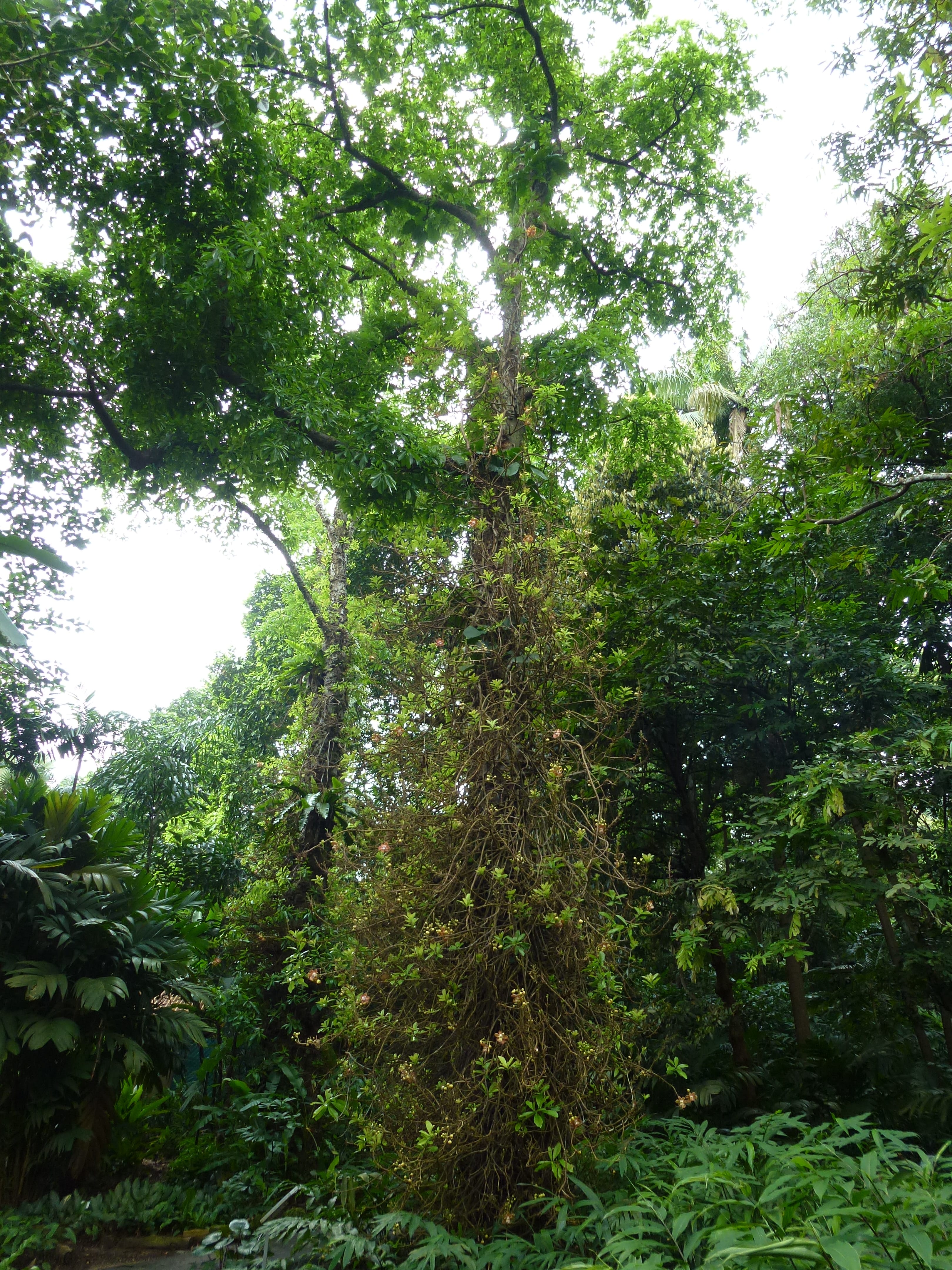
Cannon Ball Tree (HT 2014-230)
This Heritage Tree can be found in Singapore Botanic Gardens, Ginger Gardens, behind waterfall.
📷: Heritage Tree Secretariat
Heritage Tree Information
Reference ID | Scientific name: Couroupita guianensis | Location |
Native to Trinidad and the northern regions of South America, the Cannon Ball Tree is a beautiful tree with a fascinating and curious form. The name Couroupita is derived from the South American vernacular name for this tree (kouroupitoumou); and guianensis means 'from the Guianas', a region in north-central South America.
The tree is distinctly known for its cauliflorous trunk, which is lined with a mass of short woody branches bearing large showy flowers and large round fruits. The shape and size of the fruits look very much like cannon balls giving rise to its common name.
The fragrant flowers are fleshy, waxy and large, measuring about 12 cm across. The flowers produces two different type of pollen - a disk of numerous short and yellow ring-stamens, which produce fertile pollen, arranged around reduced styles, and a pink-white anemone-like structure of hood-stamens, which produce sterile pollen. Instead of nectar, pollinating insect such as Carpenter Bees (Xylocopa spp.) feed on the sterile pollen. Developing fruits can take about a year or more before reaching maturity. Ripe fruits usually fall from the tree, sometimes cracking to reveal the jelly-like pulp inside that oxidises from white to bluish-green colour and emits a pungent odour when exposed to the air. In the Amazon forests, the pulp is reportedly appetizing to animals like monkeys and peccaries, which aid in seed dispersal.
This Cannon Ball Tree at the Singapore Botanic Gardens was planted in 1931 from seeds collected by Prof E.J.H. Corner from tree specimen(s) he found when he was in Colombo, Sri Lanka.
This Heritage Tree is dedicated to John Tan Jiew Hoe, for his generous contributions to NParks' registered charity and Institution of a Public Character (IPC), the Garden City Fund.
For more information on this species, please refer to NParks Flora & Fauna Web profile. (opens in new tab)