
CentralIndian Rubber Tree2010
Indian Rubber Tree (HT 2010-181)
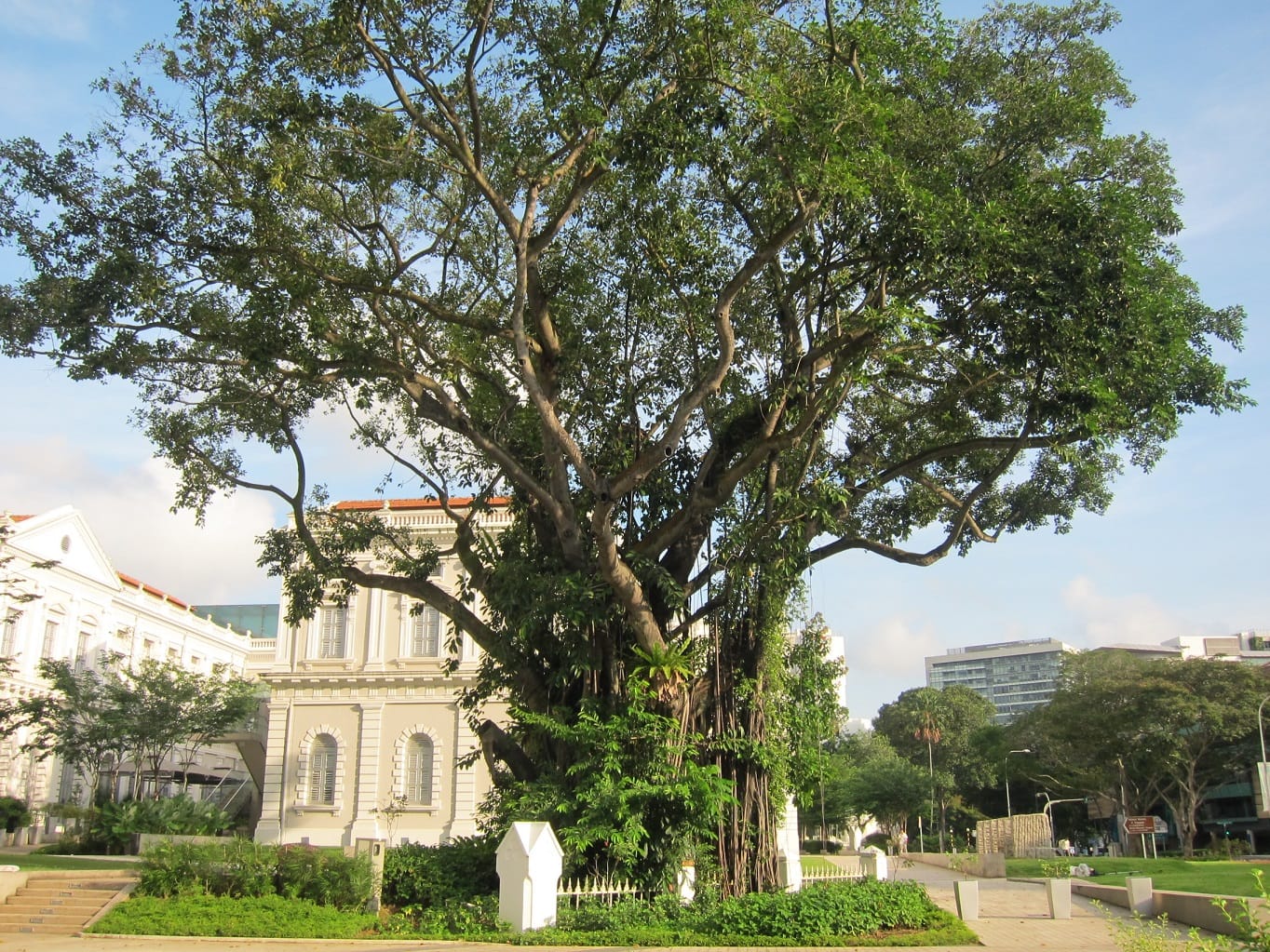
This Heritage Tree can be found in front of National Museum of Singapore.

Heritage Tree Information
Reference ID | Scientific name: Ficus elastica | Location |
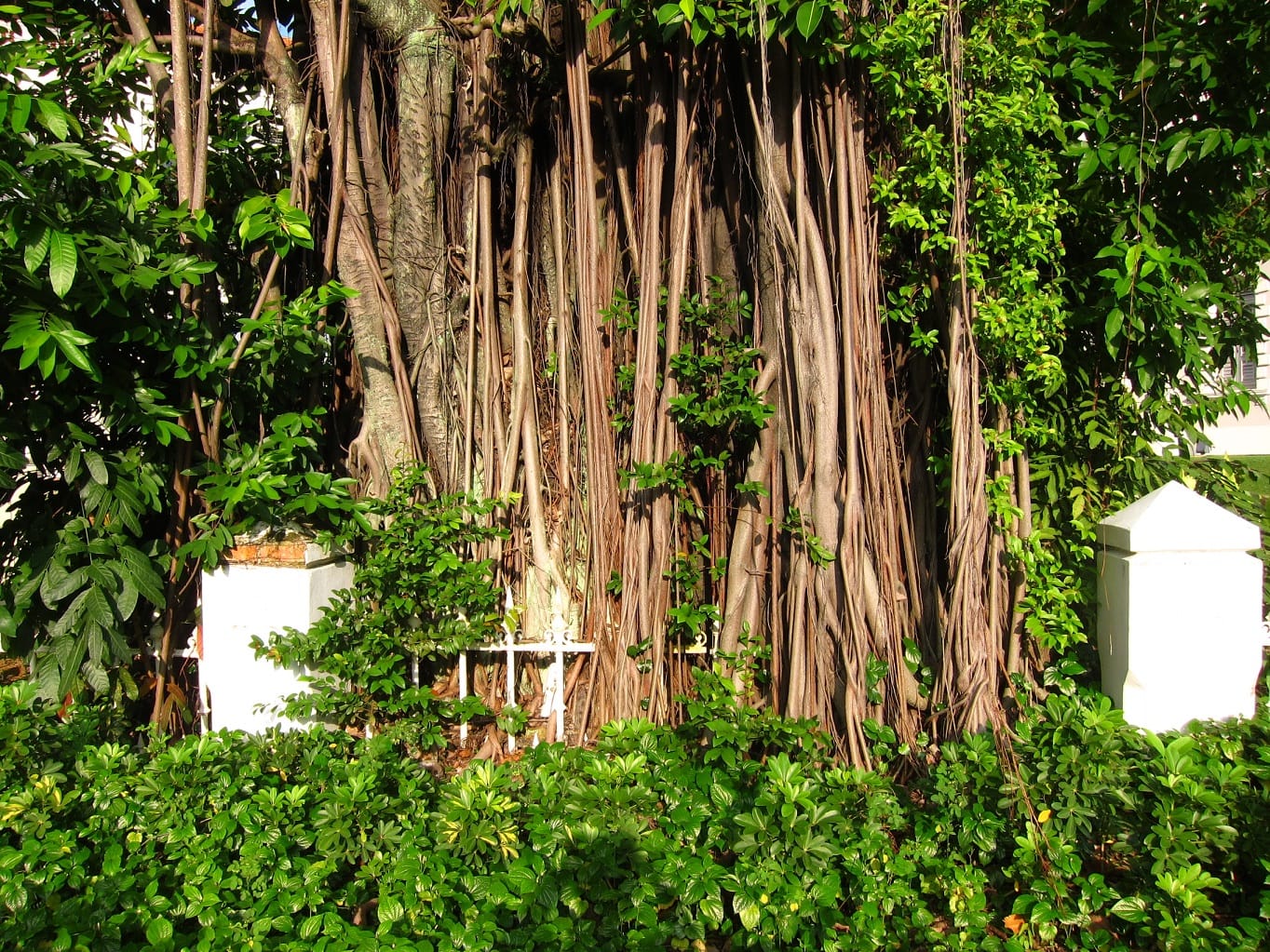
An evergreen, medium or large tree of the moist tropical forests, it is hardy and fast growing, up to 30m in height. It develops numerous descending aerial roots to form a banyan. It can be distinguished from other fig trees by the red sheath that enclosed the developing leaves. It is able to endure low light conditions and can be kept indoors as a houseplant. It requires little attention and will grow in almost any soil, as long as it has good drainage and is kept moist.
The Indian Rubber was once an economic plant in this region. Its latex was tapped and processed into Gutta Rambong, a type of rubber of inferior quality. After the introduction of the Para Rubber (Hevea brasiliensis) (opens in new tab), the planting of Indian Rubber Tree and tapping of its latex was slowly phased out. This was because the Para Rubber produced rubber of better quality and could be tapped about six years after being planted, while the Indian Rubber could only be tapped about 15 years after it was planted.
This Heritage Indian Rubber has stood here since 1955, as it can be identified in old photographs and postcards dating to that year. An old postcard has depicted this Heritage Tree growing near the fence that surrounded the Raffles Museum and Library (now, known as National Museum of Singapore) and over the years, the banyan has grown over the remnants of the fence.
For more information on this species, please refer to NParks Flora & Fauna Web profile. (opens in new tab)